
The Qu Insights archive
Every article on Canadian data sovereignty, colocation, disaster recovery and AI infrastructure, in one searchable place.
Showing
34
articles
on
sorted by
What Is GPU-as-a-Service? Cloud GPUs Vs Dedicated AI Infrastructure
GPU-as-a-Service explained for enterprise IT leaders: how it works, when cloud GPU pricing stops making sense, and what dedicated AI ...
View article

Which Data Centres Are Right for Your AI Workloads?
Training and inference have opposite infrastructure needs. Here is how to match your AI workloads to the right data centre type and ...
View article

How Much Power Do Data Centres Use? AI, Rack Density & Capacity Explained
Data centre power goes beyond total megawatts. Learn how rack density, PUE, and AI workloads shape your colocation requirements in Canada.
View article

Data Centre Tiers Explained: Tier 1 Vs 2 Vs 3 Vs 4
Data centre tiers rank facility reliability from Tier 1 to Tier 4. Learn what each level means, how certification works, and which tier ...
View article

RTO Vs RPO: Key Differences, Examples and How to Set Recovery Targets
RTO measures downtime. RPO measures data loss. See industry benchmarks and how Canadian enterprises set recovery targets that hold under ...
View article

Best Practices Structuring RFP for AI-Ready Colocation Services
Structure your AI-ready colocation RFP to cover power density, cooling SLAs, network fabric, and Canadian sovereignty requirements.
View article
Wildfire Disaster Recovery Checklist for Canadian IT Leaders
A phase-based wildfire DR checklist for Canadian IT leaders covering power shutoffs, smoke risk, geographic failover, and post-fire ...
View article

Canada's CLOUD Act Exposure: What Enterprise Buyers Must Know
Canadian data stored with US-parented cloud providers is reachable under the CLOUD Act. Here is what that means for compliance and how to ...
View article

How Much Does Colocation Cost? Canadian Data Centre Pricing Explained
Server colocation pricing in Canada depends on lease structure, power density, and market. Here is what Canadian enterprises are actually ...
View article
How Do Data Centres Use Water? Hardware Cooling and More
Data centres use water for cooling — how much, how it works, and why Canada's climate gives facilities a structural edge IT leaders should ...
View article

What Is Inference in AI? Infrastructure Decisions That Follow
AI inference runs your deployed models in real time. Here's what it means for your infrastructure, costs, and Canadian data sovereignty.
View article

What Is Data Sovereignty and How Does It Affect Your Infrastructure?
Data sovereignty is more than where data is stored. Learn the four pillars that determine true sovereignty and what to ask your provider.
View article

What Is Latency? Why Milliseconds Define Your Infrastructure Strategy
Latency determines how fast your applications respond. Learn what causes it, how it's measured, and how infrastructure placement reduces it.
View article
Best Practices in Migrating GPU Clusters From Cloud to Colocation
How to migrate GPU clusters from cloud to colocation: costs, network fabric, power density, and cutover planning covered in one guide.
View article

What Does Interconnection Mean?
Data centre interconnection links networks, clouds and providers directly. Here’s what you need to know and how it impacts data sovereignty ...
View article

Business Continuity Plan Vs Disaster Recovery Plan: Which One You Need
What separates a business continuity plan from a disaster recovery plan, what each contains, and why your organisation needs both.
View article

What Is DRaaS? The Enterprise Guide to Disaster Recovery as a Service
DRaaS keeps your business running after a failure. Learn how it works, how it compares to backup, and what to ask before you sign.
View article
How to Achieve SOC 2 Compliance: From Scope to Audit Report
How SOC 2 compliance works for enterprise IT: Trust Services Criteria, Type 1 vs Type 2, scope decisions, and how your hosting ...
View article

What Is Colocation? A Guide for Canadian Enterprise IT
Colocation explained for Canadian IT leaders: deployment types, power density, Tier ratings, PIPEDA obligations, and CLOUD Act exposure.
View article
What Are Hyperscalers? The Companies Reshaping Cloud Infrastructure
Hyperscalers are large-scale cloud providers like AWS, Azure, and Google. Learn what they're built for and what Canadian enterprises need ...
View article

Data Centre Cooling Explained: Methods, Metrics, and What to Ask
Data centre cooling affects your hardware, uptime, and workload density. Learn what cooling specs mean before you choose a colocation ...
View article
Colocation Vs Cloud: How to Choose the Right Infrastructure
Colocation vs cloud: compare costs, compliance, and workload fit to decide which infrastructure model is right for your Canadian enterprise.
View article

How to Choose a Data Centre in Canada
Learn what separates a good data centre from the wrong one: Tier ratings, sovereignty, certifications, and what Canadian buyers need to ...
View article
Enterprise Data Centre vs Hyperscale: Which Model Fits Your Business?
Enterprise data centres and hyperscale cloud serve different purposes. Here is what Canadian IT leaders need to know before choosing.
View article
What Is Cloud Repatriation? A CIO's Guide
Cloud repatriation is moving workloads out of public cloud. Here's what drives it, where workloads land, and what to assess before you ...
View article

What Is a Data Centre? The Infrastructure Behind Always-On Business
Learn what a data centre is, how tiers, redundancy, and carrier neutrality work, and how to choose the right deployment model for your ...
View article

Why Canada, Why Now: What the AI Power Race Means for Your Business
Explore Canada's opportunity to lead in AI infrastructure and how businesses can adapt to the evolving landscape for enhanced digital ...
View article

Sovereignty, uptime, and the people problem: What we heard at Data Centre Nation Toronto 2026
Discover insights from DCN Toronto 2026 on Canada's digital sovereignty, infrastructure resilience, and the critical talent pipeline ...
View article

Sovereignty Was Always the Point: AI for All
Canada's National AI Strategy signals a commitment to sovereignty in technology. Discover how it impacts your infrastructure and the future ...
View article
How to Create a Disaster Recovery Plan (That Survives Contact With a Real Outage)
A step-by-step guide to building a disaster recovery plan from BIA and recovery tiers to runbooks and DR testing.
View article
Are There AI Data Centres in Canada?
Canada has AI-capable data centre infrastructure today. Here's what makes a facility AI-ready and where enterprise capacity actually exists.
View article
What Is SOC 2? Compliance Explained for Enterprise IT Buyers
SOC 2 is an auditor's opinion, not a certification. Learn what it covers, Type I vs Type II, and what to look for in a vendor's report.
View article
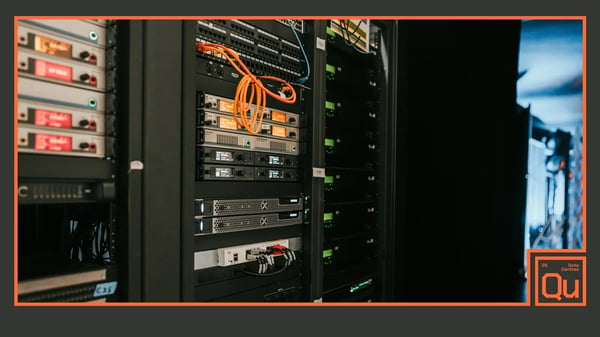
Colocation Vs On Premise: What Canadian Businesses Actually Need to Know
On-premise servers cost more than most IT budgets account for. Here's what Canadian IT leaders miss when comparing colo vs on-premise.
View article

James Beer at the House of Commons: Canada's Data Centre Moment
Qu CEO James Beer appeared before the House of Commons on Canadian data sovereignty, AI infrastructure, and why data centres are national ...
View article
No articles match that search.
Try a shorter phrase or a different topic.
Step inside the network built for high-performance IT.
Behind every high-performing system is infrastructure built to keep up. Want a closer look?
Book a tour