
Skip to content
Close

News

Test Blog

Insights and announcements

Stay up-to-date with the latest company updates, industry insights, and announcements shaping Canada’s digital infrastructure.

AI Training Vs Inference: What Each Needs From Your Data Centre

Quick Answer: AI training is the process where a model learns patterns from large datasets by adjusting its internal weights, usually over days or weeks on GPU clusters. AI inferen…

Data Centre Power Density Trends: kW Per Rack and What to Plan For

Quick Answer: Data centre power density is the electrical load each rack draws, measured in kilowatts (kW). Uptime Institute's 2026 survey puts the average of operators' most commo…

Data Centre Liquid Cooling Vs Air Cooling: Which Fits Your Racks?

Quick Answer: Air cooling is still the right choice for most enterprise racks, and liquid cooling becomes the more economical option once racks pass roughly 20 to 25 kW. Below that…

Bare Metal Vs Virtual Machines: Which Fits Your Enterprise Workloads?

Quick Answer: Bare metal gives one tenant exclusive use of a physical server with no hypervisor, which delivers the most consistent performance for latency-sensitive databases, GPU…

Canada Data Centre Rules and Regulations: What Applies in 2026

Quick Answer: Canada has no single data centre law. The rules arrive in layers: federal and provincial privacy statutes such as PIPEDA and Quebec's Law 25, sector guidance such as …

What Is GPU-as-a-Service? Cloud GPUs Vs Dedicated AI Infrastructure

Quick Answer: GPU-as-a-Service (GPUaaS) is a cloud model where organisations access GPU compute on demand without purchasing physical hardware. Providers own and manage the infrast…

Which Data Centres Are Right for Your AI Workloads?

Quick Answer: AI workloads are not a single infrastructure problem. Training and inference have different power requirements, different latency thresholds, and different facility f…

How Much Power Do Data Centres Use? AI, Rack Density & Capacity Explained

Quick Answer: Data centres range from a few hundred kilowatts to hundreds of megawatts in total capacity, but that headline number is not what determines whether a facility can sup…

Data Centre Tiers Explained: Tier 1 Vs 2 Vs 3 Vs 4

Quick Answer: Data centre tiers are a standardised classification system developed by the Uptime Institute to rate a facility's reliability, redundancy, and availability. There are…

RTO Vs RPO: Key Differences, Examples and How to Set Recovery Targets

Quick Answer: RTO (Recovery Time Objective) is the maximum time your organisation can afford to be offline after a failure. RPO (Recovery Point Objective) is the maximum amount of …

Best Practices Structuring RFP for AI-Ready Colocation Services

Quick Answer: A request for proposal (RFP) for AI-ready colocation must go beyond the standard template. Unlike a traditional data centre RFP, it needs to address sustained power d…

Wildfire Disaster Recovery Checklist for Canadian IT Leaders

Quick Answer: A wildfire disaster recovery checklist is a phase-based framework that guides IT teams through pre-season preparation, alert-stage readiness verification, active cris…

Canada's CLOUD Act Exposure: What Enterprise Buyers Must Know

Quick Answer: The US CLOUD Act (Clarifying Lawful Overseas Use of Data Act) gives American authorities the power to compel US-headquartered technology companies to hand over data t…

How Much Does Colocation Cost? Canadian Data Centre Pricing Explained

Quick Answer: Colocation pricing in Canada ranges from a few hundred dollars per month for a single server to tens of thousands for large cage or suite deployments, with power cons…
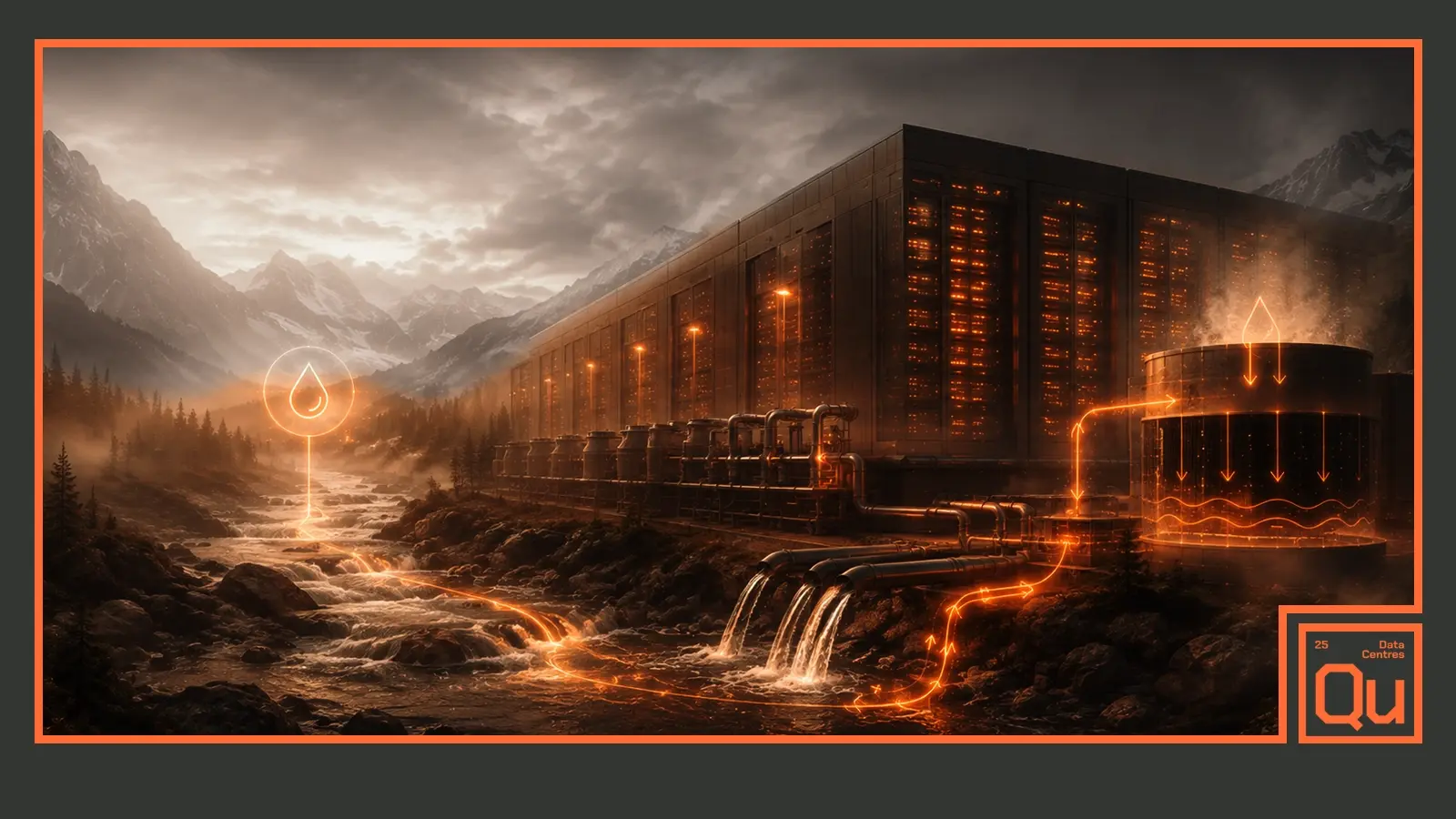
Artist rendering of data center consuming water

How Do Data Centres Use Water? Hardware Cooling and More

Quick Answer: Data centres use water primarily for cooling. As servers convert electricity into computation, they generate enormous amounts of heat that must be continuously remove…

What Is Inference in AI? Infrastructure Decisions That Follow

Quick Answer: AI inference is the process by which a trained machine learning model receives new real-world inputs and produces outputs based on what it learned during training. Ev…

What Is Data Sovereignty and How Does It Affect Your Infrastructure?

Quick Answer: Data sovereignty refers to the principle that data is subject to the laws and governance of the country in which it is collected, stored, or processed. For Canadian o…

What Is Latency? Why Milliseconds Define Your Infrastructure Strategy

Quick Answer: Latency is the time it takes for data to travel from one point to another and return, measured in milliseconds. In enterprise networks, it determines how responsive a…

Best Practices in Migrating GPU Clusters From Cloud to Colocation

Quick Answer: Moving a GPU cluster from cloud to colocation means taking ownership of the physical hardware, the network fabric, and every operational layer the cloud provider was …

What Does Interconnection Mean?

Quick Answer: Data centre interconnection is the direct, private exchange of data between networks, cloud environments, and systems within or through a facility, without routing tr…

Business Continuity Plan Vs Disaster Recovery Plan: Which One You Need

Quick Answer: A business continuity plan (BCP) and a disaster recovery plan (DRP) are not interchangeable. A BCP defines how your entire organisation keeps functioning during a dis…

What Is DRaaS? The Enterprise Guide to Disaster Recovery as a Service

Quick Answer: DRaaS, or Disaster Recovery as a Service, is a managed cloud solution that continuously replicates your IT systems to a secondary environment and automates failover w…
cables protruding from data centre hubs

How to Achieve SOC 2 Compliance: From Scope to Audit Report

Quick Answer: SOC 2 compliance is earned through an independent audit conducted by a licensed CPA firm that evaluates your organisation's controls against the AICPA's Trust Service…
A network of glowing cables across a landscape

What Is Colocation? A Guide for Canadian Enterprise IT

Quick Answer: Colocation is a data centre service where businesses house their own servers and networking equipment inside a professionally managed, third-party facility. The provi…
Digital image of a orange tower over a landscape

What Are Hyperscalers? The Companies Reshaping Cloud Infrastructure

Quick Answer: Hyperscalers are a class of large-scale cloud and technology companies, AWS, Microsoft Azure, Google Cloud, Meta, and others, that build and operate massive data cent…
A 3d iceberg concept to demonstrate cooling

Data Centre Cooling Explained: Methods, Metrics, and What to Ask

Quick Answer: Data centre cooling removes heat from servers and networking equipment to keep hardware operating safely, prevent performance throttling, and reduce the risk of outag…
A cloud server

Colocation Vs Cloud: How to Choose the Right Infrastructure

Quick Answer: Colocation means you own your hardware and rent space inside a professionally managed data centre. Cloud means you rent someone else's infrastructure and pay for what…
Canadian flag in a data centre

How to Choose a Data Centre in Canada

Quick Answer: Choosing a data centre in Canada comes down to five things: the service model that fits your infrastructure needs, the facility's physical and operational specs, the …
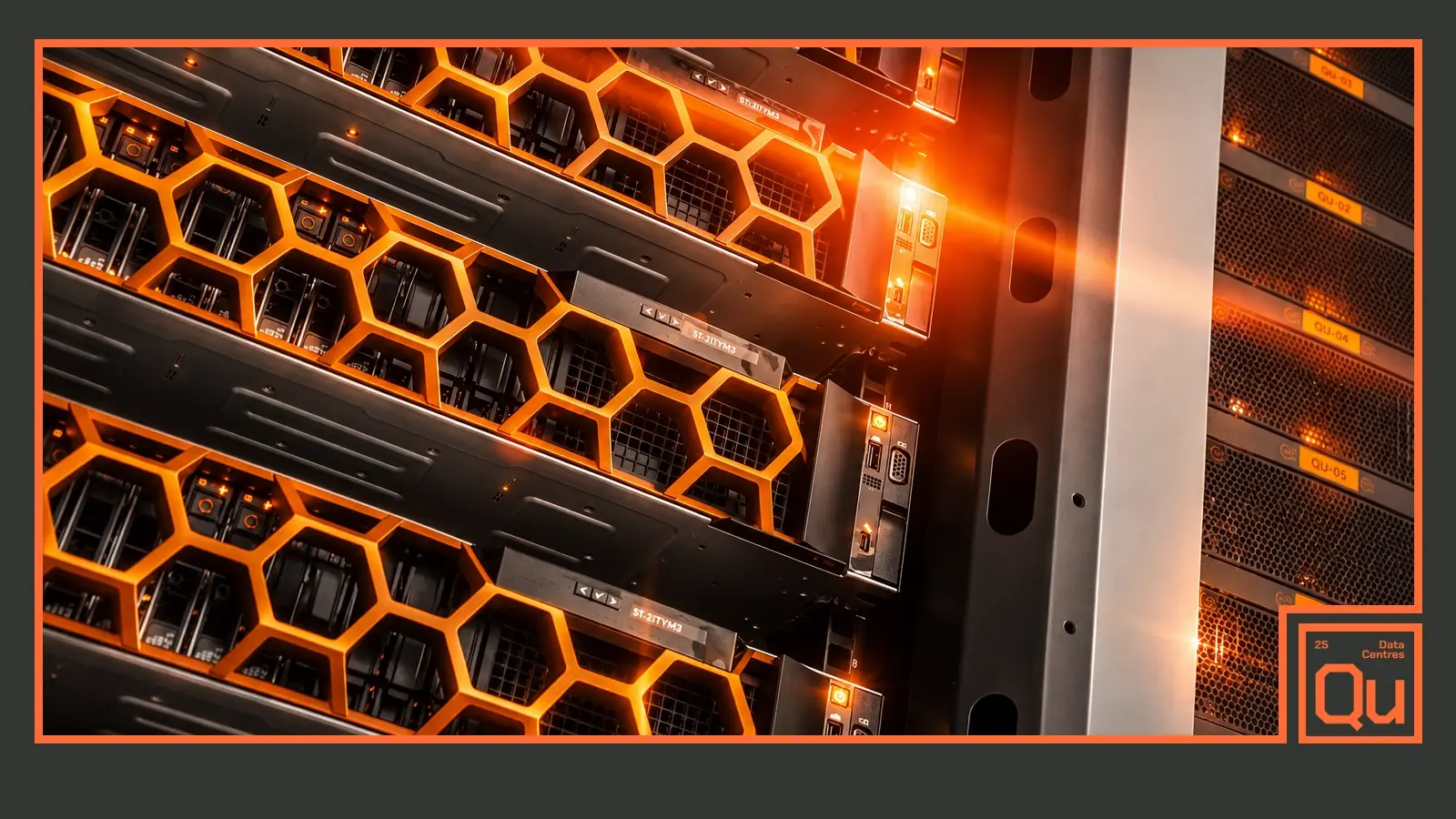
Close up of enterprise data centre racks

Enterprise Data Centre vs Hyperscale: Which Model Fits Your Business?

Quick Answer: An enterprise data centre is a private or colocation-based facility designed to meet the specific IT needs of a single organisation, giving that organisation direct c…
What Is Cloud Repatriation - Featured Image

What Is Cloud Repatriation? A CIO's Guide

Quick Answer: Cloud repatriation is the process of moving applications, data, or workloads out of public cloud environments and into alternative infrastructure, such as on-premises…

What Is a Data Centre? The Infrastructure Behind Always-On Business

Quick Answer: A data centre is a purpose-built facility that houses the servers, networking equipment, power systems, and cooling infrastructure organisations use to store, process…
James Beer from Qu Data Centers on stage at Global Energy Show 2026

Why Canada, Why Now: What the AI Power Race Means for Your Business

Our CEO joined provincial leaders on stage at the Global Energy Show in Calgary. Here’s what the conversation means for the enterprises actually making AI and infrastructure decisi…
Qu on AI panel at Data Center Nation Toronto 2026

Sovereignty, uptime, and the people problem: What we heard at Data Centre Nation Toronto 2026

Qu Data Centres was a sponsor of Data Centre Nation Toronto on June 9, 2026, and took part in three sessions across the day. Together, they told one story: Canada’s digital future …

Sovereignty Was Always the Point: AI for All

Canada just made the national case for sovereign AI. It's a genuinely hopeful moment, and it lands one practical question on your desk: is what you're running actually sovereign? C…
Disaster Recovery in action

How to Create a Disaster Recovery Plan (That Survives Contact With a Real Outage)

Quick Answer: A disaster recovery plan is a documented, tested set of procedures that defines how your organisation restores IT systems and data after a disruptive event. Building …
Map of AI Data Centres in Canada

Are There AI Data Centres in Canada?

Quick Answer: Yes, AI data centres exist in Canada and the sector is expanding at a significant pace. An April 2026 investigation by The Logic mapped 309 data centres operating acr…
Network cables in a rack server

What Is SOC 2? Compliance Explained for Enterprise IT Buyers

Quick Answer: SOC 2 is an auditing framework developed by the American Institute of Certified Public Accountants (AICPA) that evaluates how a service organisation handles customer …
A colocation rack server

Colocation Vs On Premise: What Canadian Businesses Actually Need to Know

Quick Answer: Colocation and on-premise infrastructure are both models for housing your own physical servers, but they differ significantly in who owns and manages the facility aro…
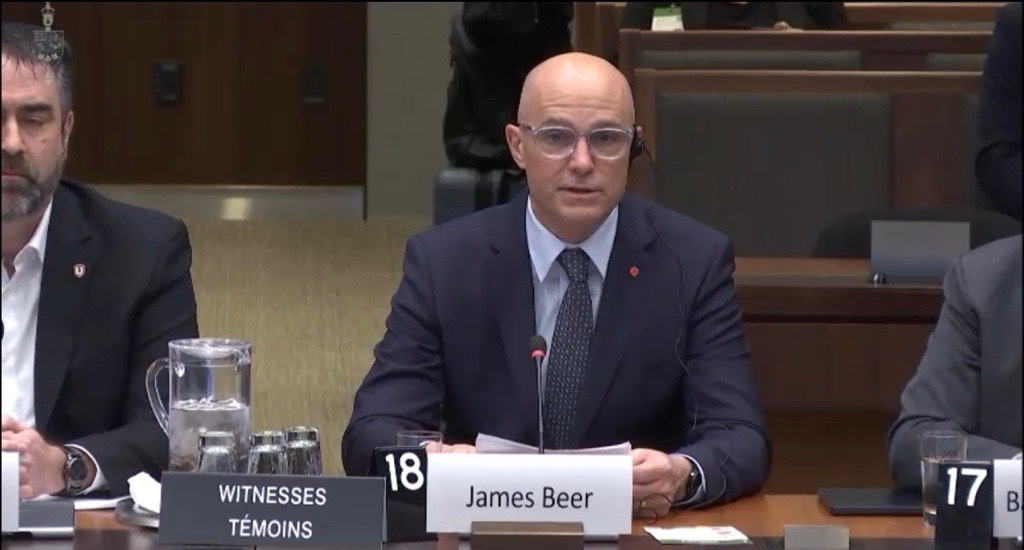
Photo of Qu Data Centres CEO James Beer at Canada's House of Commons

James Beer at the House of Commons: Canada's Data Centre Moment

When Qu Data Centres CEO James Beer appeared before the House of Commons Industry Committee on April 30th, the question at the centre of the discussion was one Canada can no longer…

Step inside the network built for Canadian innovation.

Behind every high-performing system is infrastructure built to keep up. Want a closer look?